In my post on AI-induced hypomania, I wrote about the energized state AI can create when it lowers the friction between idea and execution. With AI, you can shift from struggling to start to suddenly having too many directions to pursue.
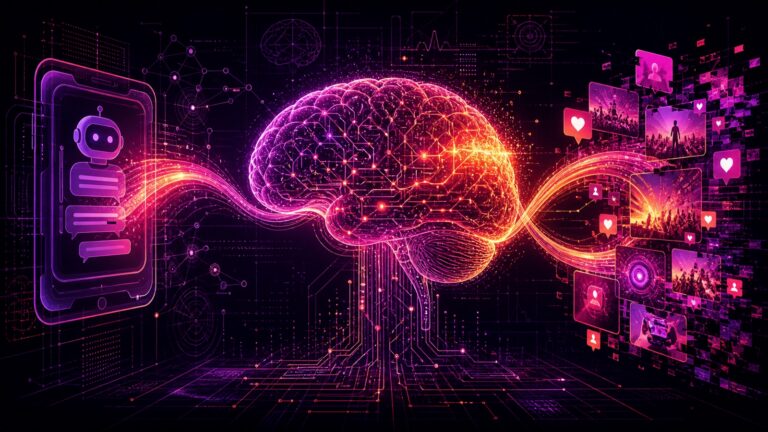
I’ve started referring to the mechanism under that shift as ritual reuptake, which I define as the repeated act of returning to the model because each interaction offers a chance to move the project forward.
The ritual is the repetition: prompt, response, interpretation, adjustment, return. You are not just using the tool once to get an answer. You are entering a loop where the act of asking again becomes part of the work.
The reuptake is a neurochemical metaphor. Each response gives a small reward signal: sometimes because it is useful, sometimes because it is surprising, sometimes because it gives you something to correct. That reward gets pulled back into the next prompt. You keep feeding the loop, and the loop keeps feeding you.
Why AI Feels So Addictive for Creative and Technical Work
Creative and technical work both require tolerating uncertainty. You usually have to spend time on a project before you know whether it works, whether it is worth continuing, or whether it should have stayed an idea. That uncertainty is where a lot of projects die. The activation cost is high, the reward is delayed, and if there are enough unclear steps between the idea and the first visible result, it becomes easy to set the whole thing aside.
AI changes the timing of that reward. It can produce a draft, outline, code snippet, design direction, or implementation plan quickly enough that the project starts to feel real before the initial motivation fades. The output may still need heavy revision, but the project has moved out of pure abstraction.
This is also where the ADHD connection comes in. A lot of people with ADHD already describe the tendency to hyperfocus and some other ADHD traits as a superpower, and the potency of this increases when you add AI. It does not fix executive dysfunction, but it makes the next step visible sooner, which can be enough to keep momentum from collapsing. With the ability to turn ideas into reality quickly, you’re rewarded before you get bored.
With ADHD, it’s common to start many projects and not finish them. AI makes it possible to get projects off the ground and also finish them so much faster. That said, if you’re a perfectionist, you may end up going back and forth with the AI for refinement. Depending on your level of skill with the project’s platform, refining small details may be faster or take the same time when done manually.
However, executive dysfunction could still be a blocker to doing it manually. Why deal with the pain of clicking around an admin interface to replace broken links when Codex or Claude Code can do it for you through the command line based on one sentence of instruction you type or speak out loud? Once you unlock this sort of potential, something clicks. All that boring work isn’t necessary, and you don’t have to live like that anymore. It feels freeing.
AI Addiction and the Feedback Loop
People often talk about AI addiction as though the chatbot itself is always the source of attachment, which can be true. If someone is using a model for companionship, emotional support, romance, spiritual validation, or the feeling of being understood by something endlessly available, then the attachment may center on the model’s simulated presence.
For creative and technical work, the addictive part is often the interaction pattern: prompt, output, response, refinement, better output, new idea, new prompt. The model does not need to feel human for that to become compelling. It only needs to give you enough useful variation that the next prompt seems worth trying.
Not every absorbing feedback loop should be treated like a problem just because dopamine is involved. Writing, running, coding, and research can all produce positive concrete results while also causing your brain to release dopamine. You don’t have to treat pleasure as evidence that a process is suspect. Work is not automatically more virtuous because it feels worse, and even when pleasure is not productive, I’d still argue against the puritanical reflex to distrust it.
Anti-AI arguments sometimes draw on the argument that there’s inherent value to doing something manually, but the technology is here. We can’t hide from it, and once you figure out what is possible, there’s no reason not to use every tool available to find the path of least resistance. Anyone who believes in the value of doing everything manually should try the tools and see for themselves that there is another way.
Why I Moved From Substack to WordPress and Renamed the Blog
This website is one of my many “AI-induced hypomania” projects. I think of ideas faster than any human can execute them, especially not me because I am allergic to boring work. What you’re reading right now is my real voice typed with my own hands, but no, I would not have the time or interest to have produced so many blogs about my ideas within a few weeks without a fair amount of AI-assisted writing. I simply would not have shared those ideas with anyone, keeping them restricted to my ChatGPT and Claude chats.
Yet with the help of AI, I began publishing my posts on my substack, titled The Stochastic Psyche. That was fun, but there were two things that really bothered me:
- I have significant experience with SEO and enjoy the process of launching a website and getting it to rank on search engines, which has now expanded to AEO and getting your website recommended in AI chats. Substack is woefully limited when it comes to SEO, yet I used it rather than making my own website out of laziness. I was frustrated that months after launching my blog, most of the articles weren’t indexed by Google even though the blog’s main homepage was indexed. Substack did not generate a sitemap for me, which I would have naturally submitted to Google Search Console. When I set up a Google Tag Manager account that referenced my Google Analytics and added the ID to substack’s native field, Google Search Console refused to verify my site even though I did everything right. That meant I couldn’t even submit my RSS feed as a sitemap. All of this was infuriating and made me regret not using WordPress every day.
- I named my blog The Stochastic Psyche because I am fascinated by psychology and the similarities and differences between human minds and LLMs. I liked the name though I knew it was a bit clunky. The original premise was that the mind is probabilistic, creativity is inferential, and AI makes those processes easier to observe. But the word “stochastic” comes with baggage in AI discourse because of the Stochastic Parrots paper and how the phrase became shorthand for dismissing LLMs as fluent statistical mimicry. That’s not an association I want, and it continued to bother me that I chose this name when I couldn’t be more pro-AI. I’m interested in what becomes possible when you actually use these tools across writing, WordPress workflows, business operations, design, content, development, and anywhere slow processes get mistaken for permanent limits.
All signs pointed in the same direction: build the WordPress site I should have built in the first place and rebrand while I was already tearing everything open.
So I changed the name to Neural Ecstasy. It fits the actual subject better: AI, creativity, psychology, model behavior, dopamine loops, and the experience of watching ideas become executable much faster than they used to.
The migration was supposed to be practical: move the archive, clean up the structure, set up Yoast, submit the sitemap, and get off Substack into a site I could control. Naturally, it grew into something bigger.
Since I know how to develop custom themes and like my websites to be unique, I wasn’t just going to pick a template. That hangup was another reason not to spend weeks and weeks on a website project without even having a monetization plan in place.
But with AI, I can be as extra as I want about making a blog. Codex and I turned an Underscores starter theme into a custom WordPress blog theme in a day. That included:
- Adding Foundation CSS, a Docker/local WordPress setup, WP-CLI tooling, and Yoast.
- Migrating post dates, author name, titles, body content, subtitles, categories, tags, and featured images. Even with only 16 posts, hell no, I was not migrating manually or even bothering with import spreadsheets. That’s the boring work I hate.
- Cleaning up old Stochastic Psyche references, improving heading hierarchy, having only one H1 per page, building archive/search/author/category/tag templates, creating a custom homepage and single post template, and adding Further Reading and breadcrumbs.
- Fixing responsive issues across iPhones, iPads, awkward browser widths, desktop, and wide desktop. I’m the type to drag around the browser and need everything pixel perfect at every possible size, an infinitely tedious process without AI to help.
The design itself involved rapidly iterating on concepts with ChatGPT, refining the UI in Claude Design, and letting Codex implement it. Two days later, my blog was live, and I had several posts indexed by Google. It may have helped that I redirected an already-indexed domain name with a site I didn’t care about to this website, but either way, the speed of the whole project was mind-blowing. And this is only one of many projects where I’ve had constant breakthroughs both personally and at work. This shit is insane.
How AI Amplifies Existing Expertise
A lot of AI discourse gets stuck between two lazy positions: either AI changes nothing, or AI changes everything. Neither frame is useful enough for what actually happens when you use these tools seriously.
The Neural Ecstasy migration did not happen because AI replaced expertise. It happened because AI amplified expertise that was already there. I know WordPress. I understand SEO. I understand content architecture. I know enough front-end development to recognize when something is broken and enough design to know when something feels wrong. I also know enough to keep pushing when the model gives me something that almost works, which is often where the useful iteration begins.
AI accelerated implementation without eliminating judgment. If anything, it made judgment more important because there were more options to evaluate, more paths to reject, and more decisions to make. The model can generate possibilities indefinitely. That does not mean all of those possibilities are good.
If you don’t know what good looks like, AI can help you produce garbage faster. Very scalable.
But if you do know what good looks like, the loop becomes powerful. You can move through idea, prototype, critique, revision, implementation, and testing in a compressed cycle.
I see it in my writing and in my work, in WordPress builds, content strategy, internal rollout documents, design iteration, and the custom app I keep building.
AI lowers the cost of experimentation, which sounds bland until you watch it happen. An idea that would normally require a formal handoff becomes a prototype. A design direction gets tested before it becomes a meeting. A WordPress implementation gets roughed out before anyone has time to worry about how complicated it might be. Content, design, development, and QA can start talking to each other through working artifacts instead of vibes trapped in documentation.
This does not eliminate specialists. It changes when specialists become necessary, what non-specialists can bring before the specialist enters the room, and how quickly an idea becomes concrete enough to argue with.
Workflows are social systems as well as technical systems. They decide who owns what, who waits for whom, what counts as expertise, how fast change is allowed to happen, and which bottlenecks get treated as natural law.
AI adoption is scary to some people because of what the tool exposes: where process is useful, where process is theater, who can adapt, which delays are necessary, and which are just rent-seeking. Once the difficulty level changes, everyone has to renegotiate what value looks like. That’s both uncomfortable and necessary.
AI Opportunity Matters More Than AI Doomerism
I get impatient with AI doomerism because the opportunity is too large to treat these tools primarily as contamination hazards. Yes, there are risks. People can misuse AI. It can generate slop, dependency, misinformation, bad code, fake expertise, and cursed LinkedIn influencer posts and cold email spam.
But refusing to use powerful tools well is also a risk. So is slowing adoption because the discourse got captured by people who either fear the machine as a demon or worship it as a god. I am not interested in either posture.
In his appearance on The Joe Rogan Experience #2521, Perplexity CEO Aravind Srinivas criticized major tech companies that warn AI is too dangerous while continuing to build it. My read was that he was calling out the way these warnings can be used to justify regulation that protects incumbents and makes life harder for smaller competitors.
I recognized some shade at Anthropic in that, though he didn’t name the company (nor did he name X or OpenAI when criticizing companions and advertising). I’m not choosing Perplexity over Claude or ChatGPT, but I found his optimism refreshing. Doomerism is most frustrating when it comes from the same companies building the best models.
I’m not arguing for blind optimism, but what I care about is what happens when people who know their domain start using these tools seriously. What happens when the distance between “someone should really fix this” and “here is a working first version” collapses? That is where the opportunity is.
Why AI-Induced Ecstasy Needs Governance
Ritual reuptake is a loop, and like any loop it can become productive, compulsive, clarifying, wasteful, or some deranged mixture of all four. The danger is not that AI makes work enjoyable. When activation is no longer the primary constraint, attention, judgment, and selection become the constraints.
The exhilaration is real, and so is the need for governance. AI gives you motion, but it does not tell you where motion belongs. That responsibility remains human.
The models provide velocity, scaffolding, and a steady stream of outputs you can react to, reject, refine, or build on. The fact that judgment is still required does not make the acceleration less real. It makes it more interesting. The discipline has to come after, when the glow wears off and the project is live.